


AstroForge lights up palladium space race with asteroid fly-by mission
Published February 15 - 2025
AstroForge, a space mining startup, has announced plans to embark on its first fly-by mission towards the end of February after signing a deal with space launch company Stoke Space, a producer of 100% reusable next-generation rockets. The asteroid in question to be targeted in the Brokkr-2 (Odin) mission is 2022 OB5, a small near-Earth asteroid measuring a few dozen metres across that was discovered in 2022.
The rocket is expected to reach the asteroid around December this year, when it will be able to gather more information about the spectroscopic composition of the asteroid and the specific high-value metals that could be mined from it. One method for calculating the chemical structure of the asteroid is by measuring the gravitational tug it exerts on the craft, while photographing craters and cracks on the surface will also provide valuable information.
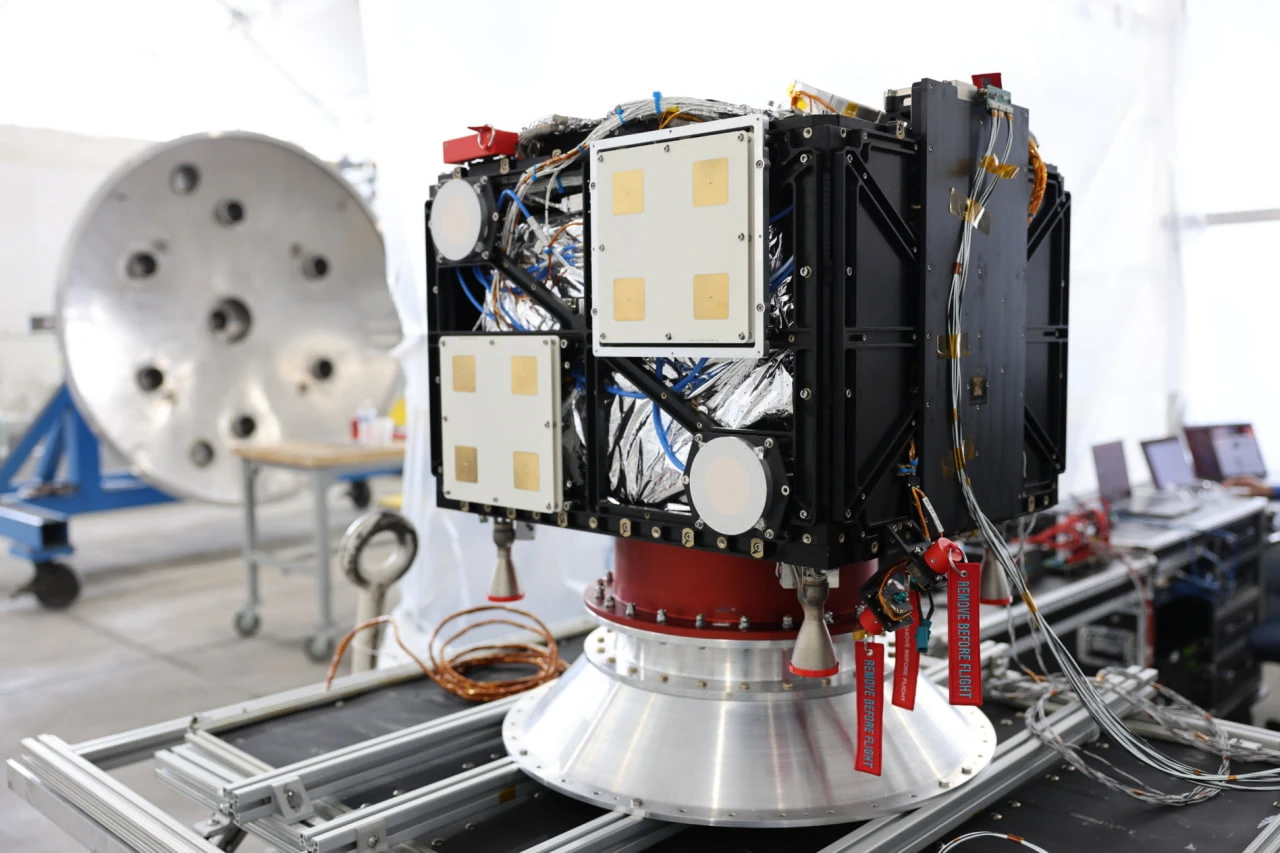
AstroForge’s Odin spacecraft. Image: AstroForge
This is AstroForge’s second mission overall, after Brokkr-1 lifted off in April 2023. It was launched into low-Earth orbit, but encountered issues and burned up in the atmosphere, with the last contact made a little over a year later in May 2024. Since that first mission, AstroForge has made changes to the Odin spacecraft model by focusing more on in-house component production.
Odin, the size of a microwave oven, is a rideshare payload launching as part of the Intuitive Machines IM-2 mission on a Falcon 9 rocket in Florida. IM-2 is a lunar mission taking place under NASA’s Commercial Lunar Payload Services (CLPS) programme, and aims to investigate lunar water. Odin will separate from the main rocket around 45 minutes after the launch, beginning a 301-day journey to the asteroid. NASA’s Deep Space Network is currently under significant operational pressure, but the asteroid will come within 404,000 miles of the Earth in January 2026, allowing the spacecraft to communicate with commercially available satellite dishes.
Founded in January 2022, AstroForge is seeking to mine platinum group metals (PGMs) from asteroids and bring the critical materials back to Earth. Based in California, the startup announced its intention of becoming the world’s first viable asteroid mining company. Following a successful Series A funding round led by Nova Threshold in August 2024, AstroForge has secured a total capitalisation of $55 million. Stoke Space, meanwhile, has raised $480 million to date after a Series C round was concluded with new and existing investors in January 2025.
Brokkr-2 (Odin) is being treated as a proof of concept mission, determining the viability of mining so-called M-type asteroids such as 2022 OB5, which is likely to become more commercially viable in the future. AstroForge is hoping to lead the charge and show the potential for big breakthroughs where others have failed – so far, no private company has operated a mission beyond the Moon in deep space. According to CEO Matt Gialich, 2022 OB5 will be “lucrative, but not our most lucrative asteroid,” and was chosen for its size, likely composition, and projected distance to Earth when the fly-by is set to occur. This is the first time the company has named a target asteroid, though it is unlikely in future to name its top targets before any given launch.
Next up after the Odin mission will be Vestri, which aims to land on an asteroid as soon as next year and begin extraction. The asteroid in question could be 2022 OB5 if the spectroscopy results indicate the presence of a significant amount of key metals. The spacecraft is the size of a refrigerator, and its magnetic landing legs would be able to stick to the asteroid’s surface if there is a high enough metal content. NASA’s $1.2 billion Psyche spacecraft is currently on its way to the asteroid of the same name, with an expected arrival in 2029. Astronomers believe that the asteroid may be a metal-rich fragment of a failed planet’s core.
The platinum group metals – platinum, palladium, osmium, iridium, ruthenium and rhodium – have a major role to play in the energy transition. Mining these metals in space is of particular interest to high-tech nations such as the US, which lack certain critical metals in their own deposits. Ultimately, space mining has a number of key advantages over mining on Earth, chief among them the minimal disruption and theoretically limitless resources. Efforts such as those of AstroForge could help humanity reduce its dependency on hydrocarbons by providing the critical raw materials for electric vehicle batteries, hydrogen fuel cells, photovoltaic solar panels and much more.
Source: https://payloadspace.com/astroforge-names-target-asteroid-signs-deal-with-stoke/
Recent News
October 09 - 2025
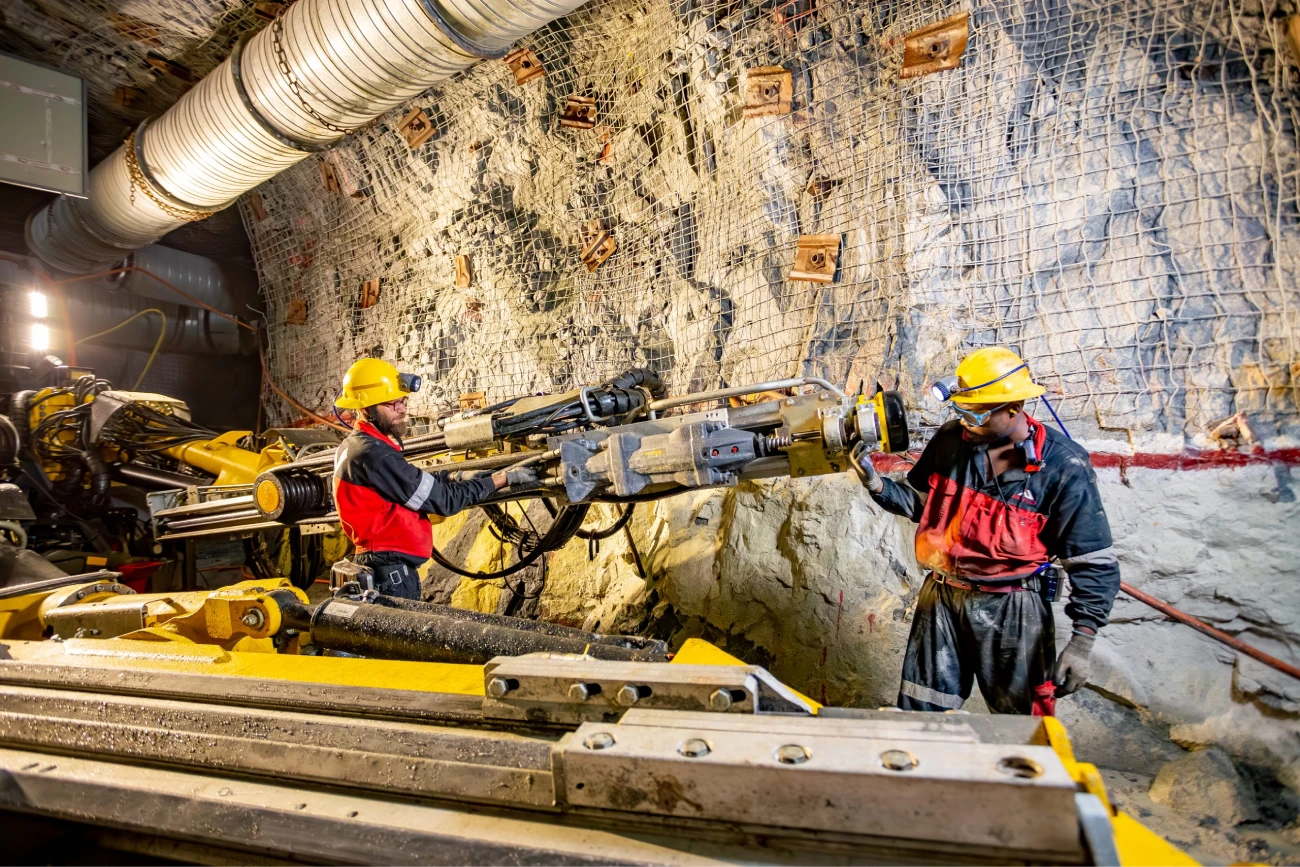
Ivanhoe Mines, a Canadian mining and exploration company known for several high-profile discoveries, has driven underground development into the high-grade Platreef orebody for the first time. The company’s Executive Co-Chair Robert Friedland and President and Chief Executive Officer Marna Cloete detailed the breakthrough, with mining crews entering the orebody at the 850-metre level with the first blast of high-grade ore in early May.
September 24 - 2025
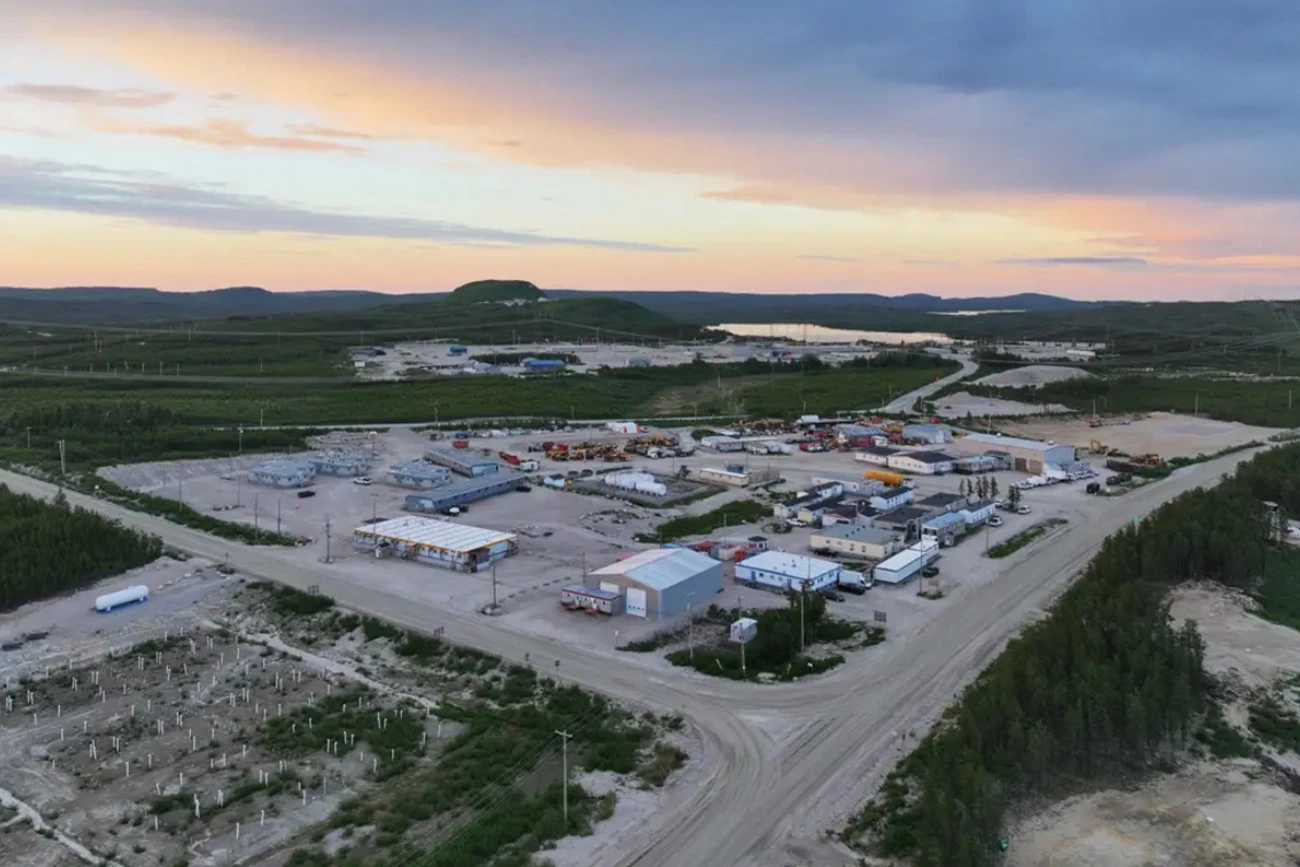
Canadian exploration company Power Metallic has reported results from its deepest intersection to date at the Lion Zone, carried out in the wake of successful exploration activities last year. The 2024 discovery of the zone, 5.5 kilometres away from the Nisk Main Zone, has shifted the company’s focus towards what could prove a game-changing discovery.
September 05 - 2025
Australian mining company Southern Palladium has received an environmental authorization (EA) on its flagship Tier 1 Bengwenyama project from South Africa’s Department of Mineral and Petroleum Resources (DMPR). The license outlines rights on underground mining and related infrastructural activities on the project, marking a key milestone towards development.

August 25 - 2025
A study from a team of chemists working at McGill University in Montreal, Canada has proposed a new method for synthesising palladium catalysts using electrochemical potential, supporting both oxidative addition and reductive elimination with two-electron exchange in mild temperature and pressure conditions.
August 05 - 2025
A team of functional materials researchers in China developed a copper–palladium catalyst that has been shown to improve catalytic activity and selectivity in the electrochemical nitrate reduction reaction (NO3RR), leading to improved ammonia yields. Scaling this process could significantly reduce the energy and environmental burden of the ammonia industry as a whole.
July 21 - 2025
Zhe Gong et al. from the China University of Geosciences and Zhiping Deng and Xiaolei Wang from the University of Alberta (Canada) have developed a highly efficient palladium catalyst that could support the large-scale rollout of hydrogen fuel cells. The catalyst was designed by doping palladium with cobalt producing atomic cobalt (Co)-doped Pd metallene (Co-Pdene), and demonstrated exceptional electrocatalytic performance while maintaining its structural integrity.