


Generation Mining secures final construction permit for Marathon Project
Published April 23 - 2025
Generation Mining has been granted its final construction permit for the landmark Marathon Project from the Ministry of Natural Resources in Ontario. The latest news is a promising sign of progress on the copper–palladium project, which aims to build critical mineral resilience in the country, and is one of the few undeveloped palladium deposits in North America.
The Ontarian government department, responsible for managing minerals and other natural resources in Canada’s southernmost province, has given the project all three outstanding approvals for infrastructure building under the Lakes and Rivers Improvement Act (LRIA). The approvals concern the water management structures at the copper–palladium project, and mark a significant step forward as Generation Mining looks ahead to the commencement of development.
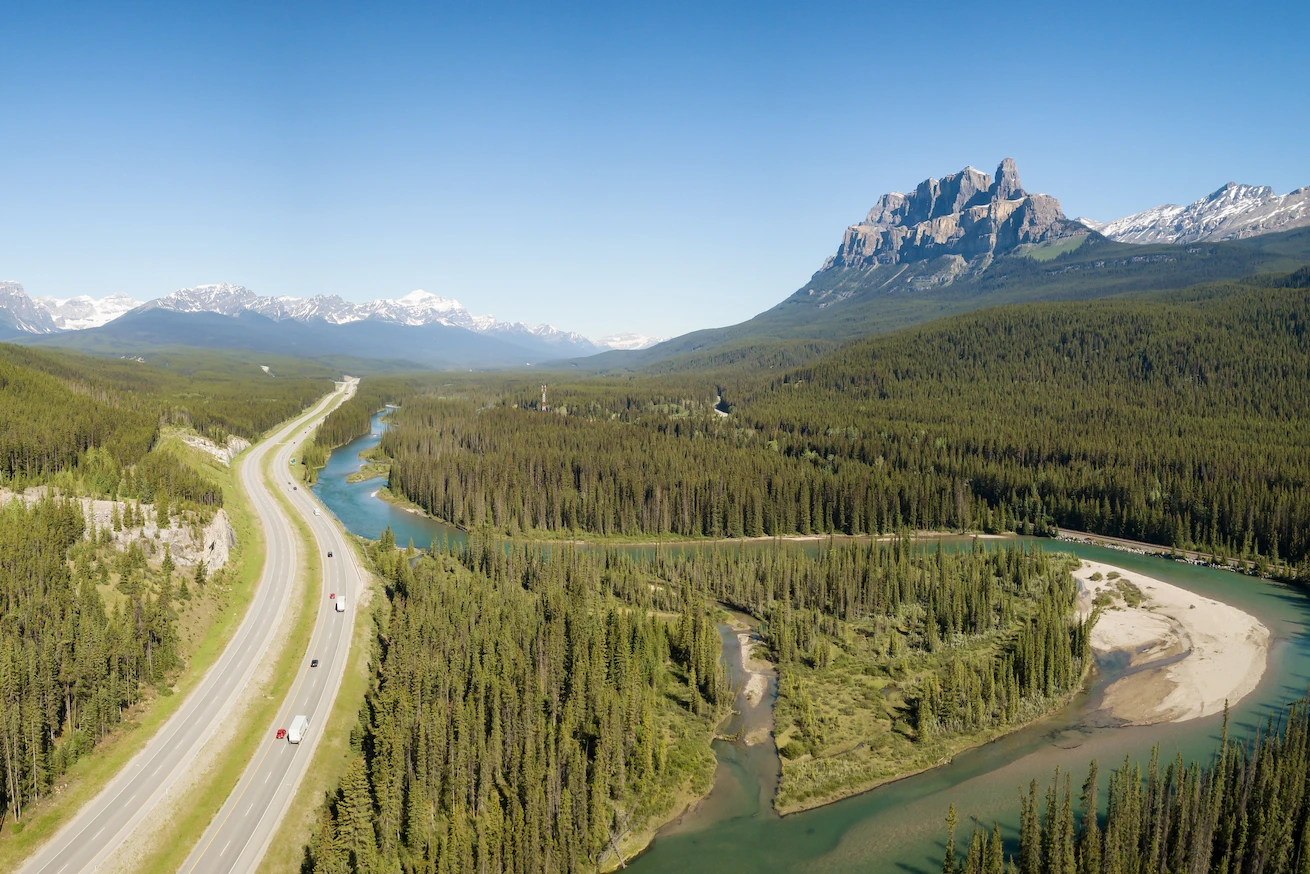
Trans-Canada Highway
The Marathon Project is located in Northwestern Ontario, along the Trans-Canada Highway on the north-eastern shore of Lake Superior, approximately 10km north of the town of Marathon. The project will involve the construction, operation, decommissioning and remediation of three open pits, in which the copper concentrate to be produced consists primarily of copper, palladium and platinum. The development will also provide for the construction of an on-site ore processing facility, a transmission line and access road, warehousing, a water management system and other associated infrastructure.
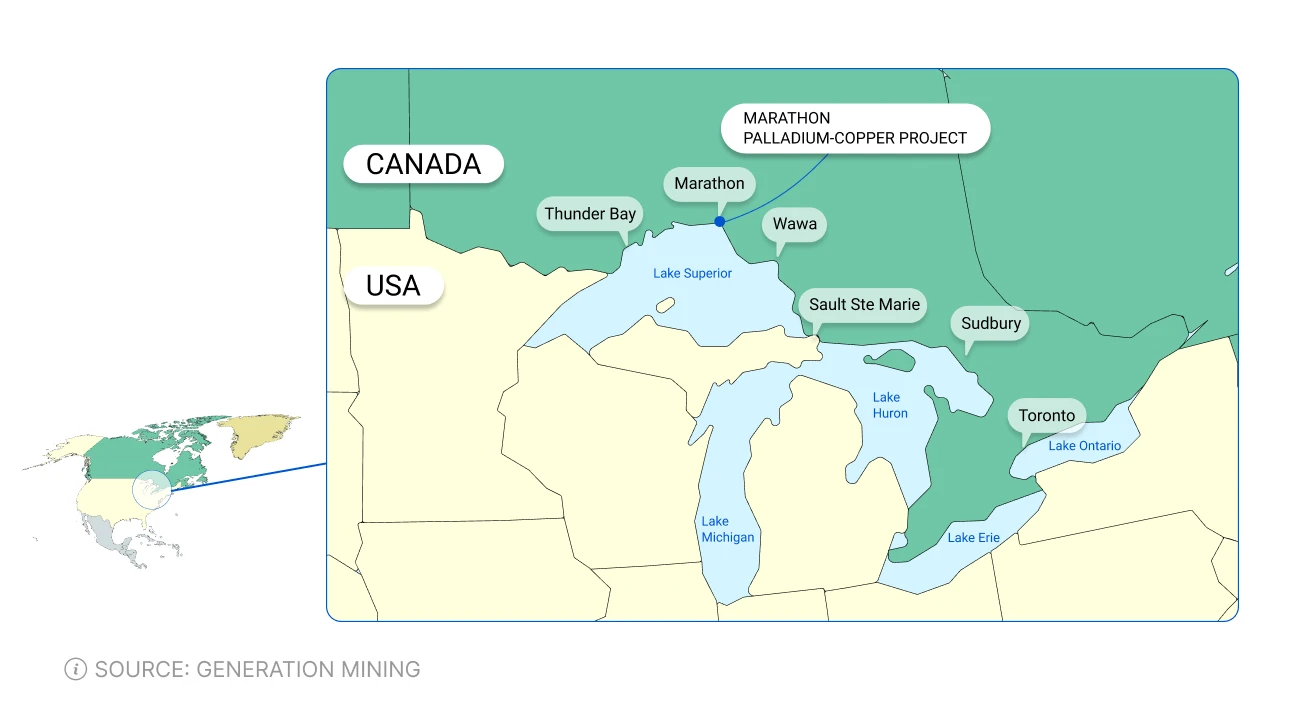
Location of the Marathon project
The project is expected to contribute to the stable supply of several key metals over its 13-year mine life, including palladium, copper and platinum. Feasibility study results indicate strong early-stage output potential for copper and precious metals, with optimization planned throughout the mine’s operational phase. Ore processing is expected to begin at designed capacity, with incremental increases planned as infrastructure upgrades are implemented.
Exploration for copper and nickel deposits in the wider area began in the 1920s and continued through to the 1940s, when several titaniferous magnetite and disseminated chalcopyrite occurrences were identified. The Marathon Project began life around four decades ago, with several phases of exploration and economic evaluation carried out in that period, from geophysical surveys, prospecting and trenching to a diamond drilling programme and metallurgical studies.
Generation Mining filed its environmental impact statement (EIS) to a Joint Review Panel (JRP) in early 2021, with public hearings taking place from March to May the following year. The go ahead was then given following a decision by Environment and Climate Change Canada, a nationwide government department, and the Ministry of the Environment, Conservation and Parks of Ontario. Federal funding for the infrastructure was secured via Canada’s Critical Minerals Infrastructure Fund (CMIF) in late 2024, pending final due diligence. Since the awarding of the final construction permits, Generation Mining has filed a technical report, which also included an update to the feasibility study results.
Generation Mining now requires just one outstanding approval from the Government of Ontario in order to proceed with the project. Once an Environmental Compliance Approval – Industrial Sewage Works (ECA-ISW) permission has been received from the Ministry of the Environment, Conservation and Parks, construction is set to get underway. According to the company’s President, Chief Executive Officer and Director Jamie Levy, “we are closer than ever to being fully permitted and ready for construction,” adding that “we remain committed to working closely with all regulatory bodies to ensure the highest standards of environmental and social responsibility in the construction and operation of the Marathon Project.”
Generation Mining is a Canadian mining company listed on the Toronto Stock Exchange (TSE:GENM). It is the 100% owner of the Marathon Project, with Sibanye-Stillwater possessing an effective attributable share of 13.9% via its equity interest in Generation Mining.
Source: https://www.tipranks.com/news/company-announcements/generation-mining-secures-final-construction-permit-for-marathon-project, https://genmining.com/projects/location/
Recent News
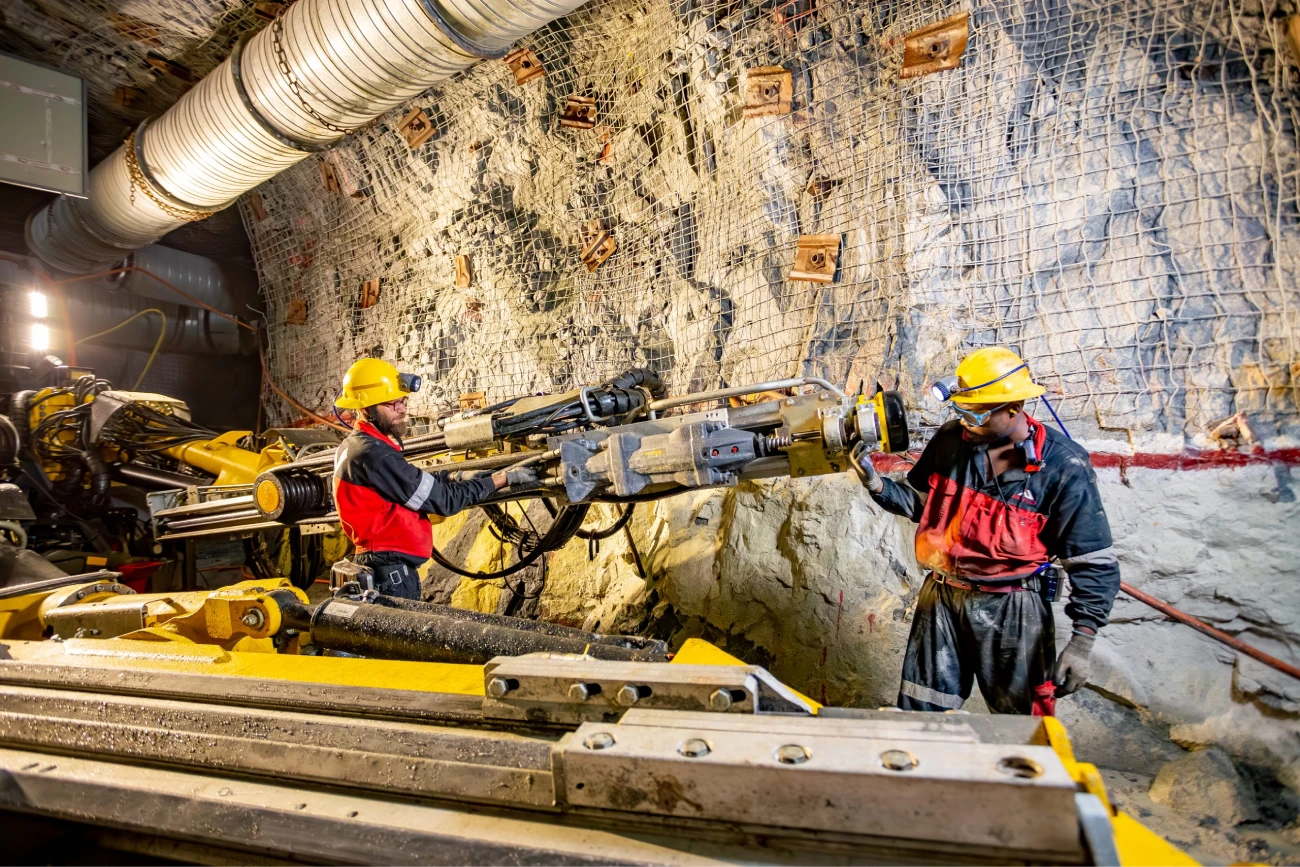
October 09 - 2025
Ivanhoe Mines, a Canadian mining and exploration company known for several high-profile discoveries, has driven underground development into the high-grade Platreef orebody for the first time. The company’s Executive Co-Chair Robert Friedland and President and Chief Executive Officer Marna Cloete detailed the breakthrough, with mining crews entering the orebody at the 850-metre level with the first blast of high-grade ore in early May.
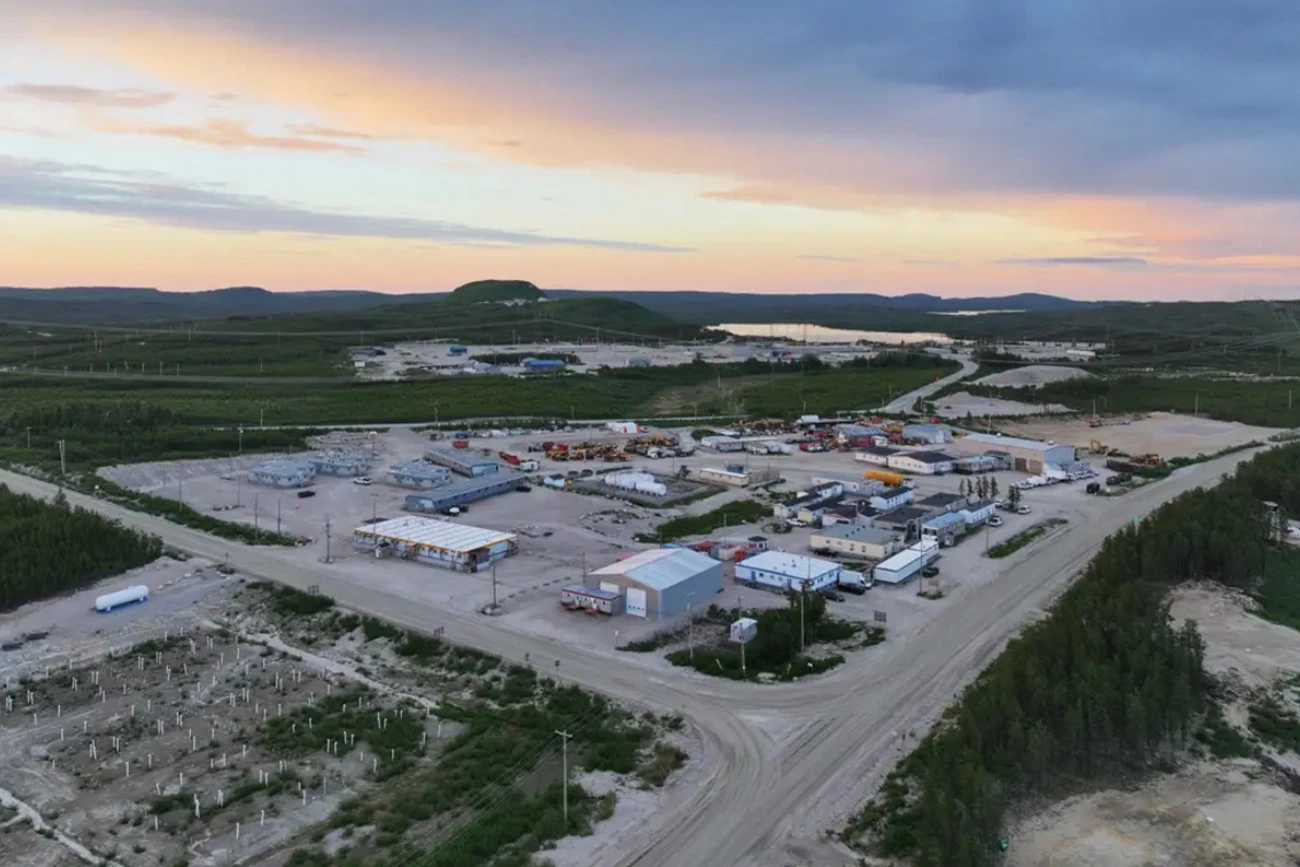
September 24 - 2025
Canadian exploration company Power Metallic has reported results from its deepest intersection to date at the Lion Zone, carried out in the wake of successful exploration activities last year. The 2024 discovery of the zone, 5.5 kilometres away from the Nisk Main Zone, has shifted the company’s focus towards what could prove a game-changing discovery.
September 05 - 2025
Australian mining company Southern Palladium has received an environmental authorization (EA) on its flagship Tier 1 Bengwenyama project from South Africa’s Department of Mineral and Petroleum Resources (DMPR). The license outlines rights on underground mining and related infrastructural activities on the project, marking a key milestone towards development.

August 25 - 2025
A study from a team of chemists working at McGill University in Montreal, Canada has proposed a new method for synthesising palladium catalysts using electrochemical potential, supporting both oxidative addition and reductive elimination with two-electron exchange in mild temperature and pressure conditions.
August 05 - 2025
A team of functional materials researchers in China developed a copper–palladium catalyst that has been shown to improve catalytic activity and selectivity in the electrochemical nitrate reduction reaction (NO3RR), leading to improved ammonia yields. Scaling this process could significantly reduce the energy and environmental burden of the ammonia industry as a whole.

July 21 - 2025
Zhe Gong et al. from the China University of Geosciences and Zhiping Deng and Xiaolei Wang from the University of Alberta (Canada) have developed a highly efficient palladium catalyst that could support the large-scale rollout of hydrogen fuel cells. The catalyst was designed by doping palladium with cobalt producing atomic cobalt (Co)-doped Pd metallene (Co-Pdene), and demonstrated exceptional electrocatalytic performance while maintaining its structural integrity.