


News
News materials posted on the website are aggregated from authoritative third-party sources. The Palladium Institute is not responsible for information published by third-party organisations.
June 03 - 2025
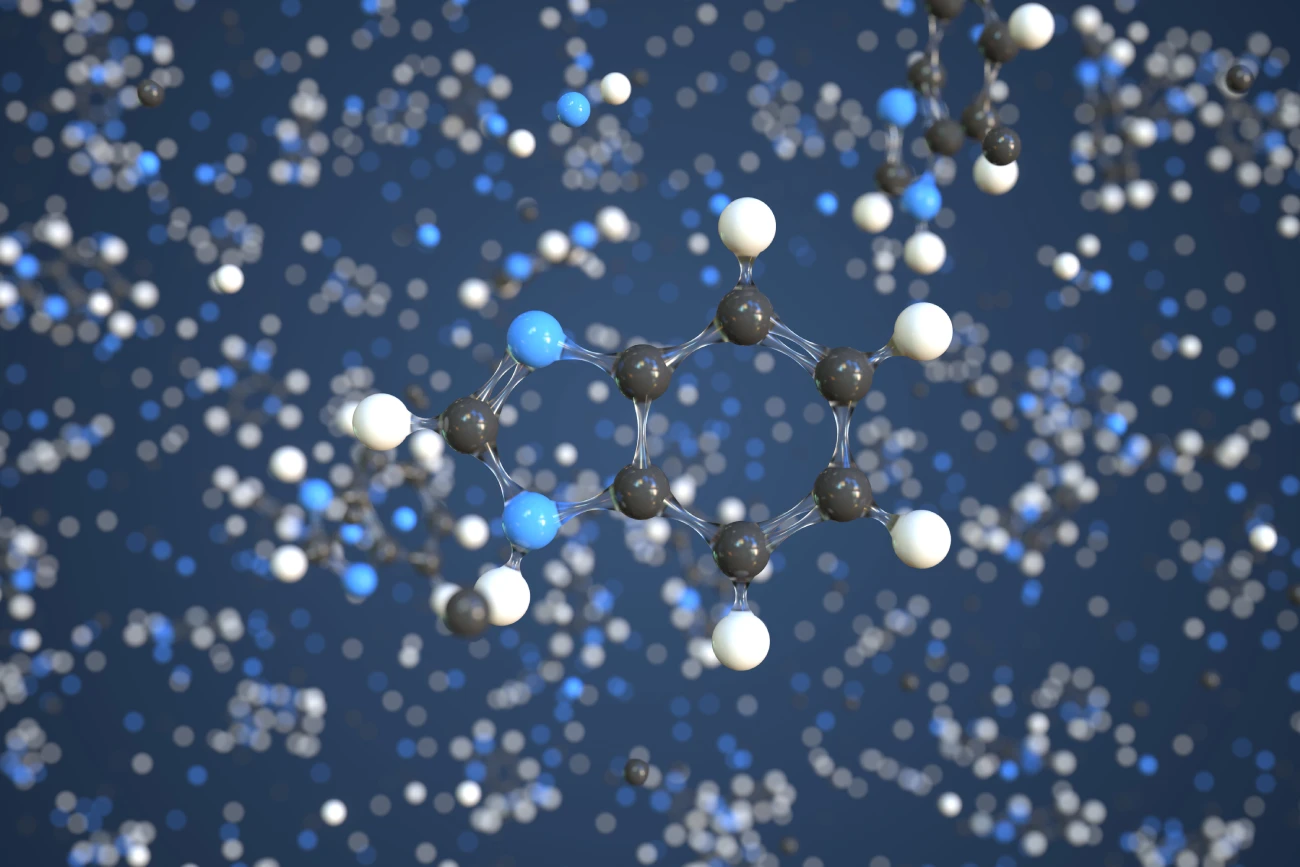
Benzimidazole is an organic compound consisting of two fused rings – one benzene and one imidazole. This structure makes it a versatile compound with applications in various fields, including medicine, agriculture and industry.

May 29 - 2025
The pharmaceutical industry is constantly working to produce more effective and affordable medications. One of the most promising areas of drug development in this regard is the use of catalysts in synthesising active substances. Catalysis can significantly increase the efficiency of synthesising complex molecules. New research conducted at the University of Missouri, USA represents a breakthrough in this field.

May 20 - 2025
Palladium has already proven its effectiveness in a number of processes, including cross-coupling reactions and carbon–hydrogen bond activation. Until recently, however, modifying stable organic compounds such as ketones and simple ethers with palladium remained a serious scientific challenge. A recent study by chemists at Scripps Research, published in the Nature journal, has demonstrated a breakthrough solution to this problem.

May 12 - 2025
The development of modern pharmaceuticals and synthetic drugs for cancer treatment requires the constant creation of new molecules with high biological activity. However, synthesising such substances is a complex and expensive process. One promising compound is phaeocaulisin A, a guaianolide sesquiterpene found in a specific species of ginger plant (Curcuma phaeocaulis) that exhibits potent anti-cancer activity.

May 03 - 2025
Alaska Energy Metals has published a revised Mineral Resource Estimate for its Nikolai project, with the figures now significantly higher than previously announced. The North American mining company, which is exploring and developing mineral projects in the United States and Canada, is expecting to produce globally significant quantities of nickel along with numerous key metals under the project.

April 23 - 2025
Generation Mining has been granted its final construction permit for the landmark Marathon Project from the Ministry of Natural Resources in Ontario. The latest news is a promising sign of progress on the copper–palladium project, which aims to build critical mineral resilience in the country, and is one of the few undeveloped palladium deposits in North America.

April 13 - 2025
Researchers at the University of British Columbia have conducted a new detailed study of the hydrogen transfer pathways using a palladium membrane reactor. The study looks at the differences between homolytic and heterolytic pathways during hydrogenation reactions, noting how the behaviour of hydrogen changes based on different levels of current density.

April 07 - 2025
The novel two-dimension material with Pd was studied in detail in the hydrogen evolution reaction (HER) process, catalysing the electrolysis of water into oxygen and hydrogen. As part of the HER process, the hydrogen atoms generated at the electrode’s surface are converted during electrolysis into hydrogen gas, H₂. This gas can then be used in a number of industries, from clean energy and the treatment of metals to fertiliser production and food processing.

March 24 - 2025
The inaugural Palladium Global Science Award is now officially open for submissions. The new industry prize is looking for new research, analysis and practical developments from scientists, research teams and startups with a view to advancing development in novel palladium applications.
