


Palladium–carbon composites study represents prospective in electrochemical technologies
Published June 13 - 2025
A team of scientists based in Siberia has synthesised palladium–carbon nanoparticles that could improve energy sources and support research across further applications.
A team of scientists based in Siberia has synthesised palladium–carbon nanoparticles that could improve energy sources and support research across further applications.

Krasnoyarsk Science Centre of the Siberian Branch of the Russian Academy of Sciences. Image: ksc.krasn.ru
The researchers studied the properties of palladium-carbon nanocomposite powders obtained by a two-stage synthesis method. At the first stage, powder called “carbon condensate” was obtained by spraying in an arc discharge plasma of alternating current in a helium atmosphere. At the second stage, powder oxidation was carried out during its heating in an open crucible while blowing with a mixture of argon and 20 wt.% oxygen. As a result, two parts of powder were obtained from carbon condensate.
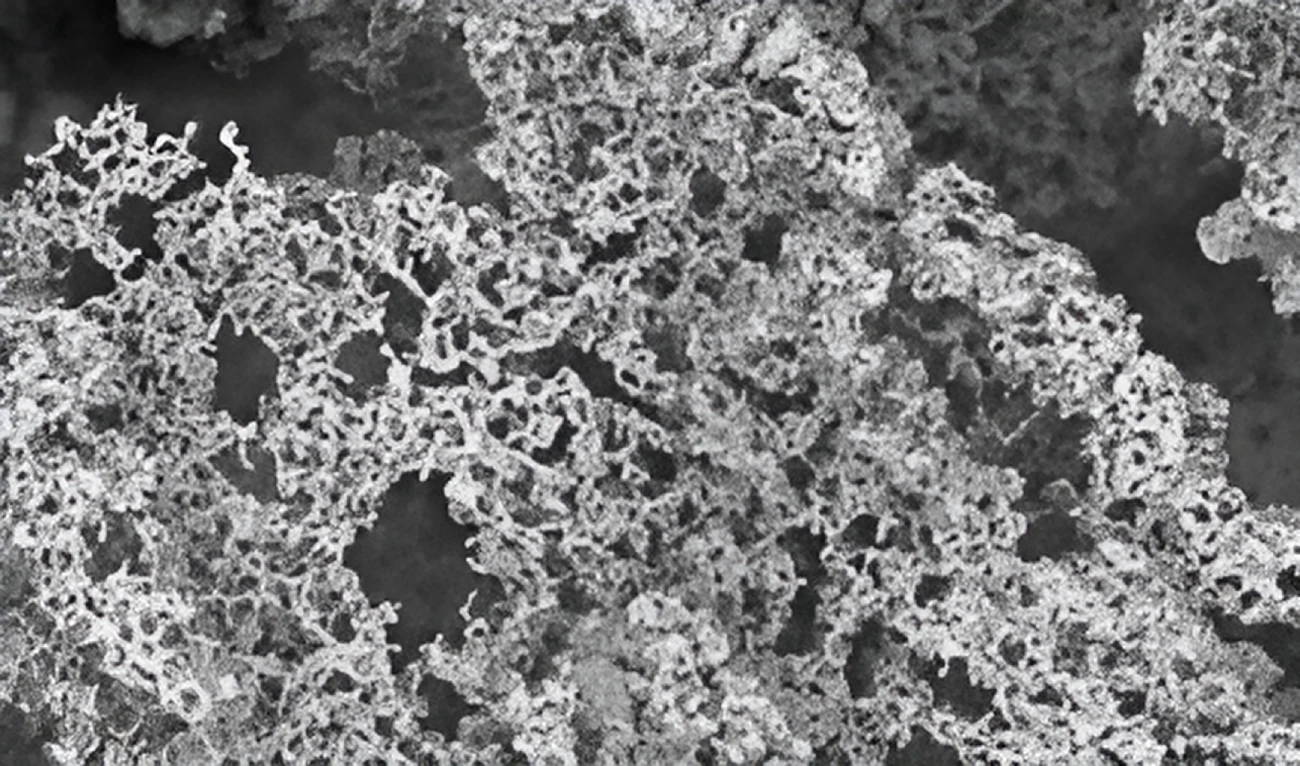
Synthesis and research of carbon and palladium-based composites.
Image: Zhurnal Tekhnicheskoi Fiziki, 2025, Volume 95, Issue 2, 398–406
According to the chemical composition analysis, the initial carbon condensate contained 79.7% carbon and 18.4% palladium by weight. The lower of two parts, which was black in colour, was found to contain 91.1% carbon and 7.7% palladium, while the upper part, light grey in colour, contained 1.1% carbon and 95.7% palladium.
To determine electrochemical behaviour the team studied the cyclic voltammetry of ethanol oxidation in an alkaline electrolyte using graphite electrodes, onto which the synthesised palladium–carbon nanopowders were deposited. While the chemical composition of the nanocomposite materials affects their properties and electrochemical behaviour, the shape and size of the powder particles also have a significant impact, in addition to other factors.
The strongest performer was the sample which contained the largest amount of palladium, notably consisting of metallic palladium and PdO2 (palladium(II) oxide). This sample showed an order of magnitude increase in the peak current value. The initial sample also showed high electrochemical energy due to the presence of fullerene, an allotrope of carbon characterised by its hollow hexagonal shape and which accounted for 10.1% of the substance by weight.
Today, traditional materials are increasingly being replaced by composite materials in high-tech industries. The latter possess a number of advantages, and rigorous testing in controlled environments allows researchers to find effective compositions that harness the best qualities of multiple different elements. Carbon-based composite materials have significant physical capabilities, and certain composites have a high specific surface area, varied pore sizes, and high electron conductivity. Graphite, an allotrope of carbon, is a widely used carrier of substances that accelerate electrochemical reactions in numerous areas of application, from sensors to energy production.

Synthesis and research of carbon and palladium-based composites.
Image: Zhurnal Tekhnicheskoi Fiziki, 2025, Volume 95, Issue 2, 398–406
Palladium is of particular interest to researchers thanks to its unique properties. It has a clearly defined structure, excellent mechanical and thermal stability, and high catalytic activity especially in nanoparticle form, which supports long-term repeated use. The initial powder obtained through arc discharge, which contains 18.4% palladium, and the light grey sample containing 95.7% palladium, merit further research as electrode materials, with potential applications in batteries, contacts in circuits, sensors, catalysts, microelectronics and biomedicine.
The research was funded in part by the Ministry of Science and Higher Education of the Russian Federation. The team of scientists is based in Krasnoyarsk, at the Siberian Federal University and the Krasnoyarsk Science Centre of the Siberian Branch of the Russian Academy of Sciences.
Source: https://www.mathnet.ru/php/archive.phtml?wshow=paper&jrnid=jtf&paperid=7211&option_lang=eng
Recent News

October 09 - 2025
Ivanhoe Mines, a Canadian mining and exploration company known for several high-profile discoveries, has driven underground development into the high-grade Platreef orebody for the first time. The company’s Executive Co-Chair Robert Friedland and President and Chief Executive Officer Marna Cloete detailed the breakthrough, with mining crews entering the orebody at the 850-metre level with the first blast of high-grade ore in early May.

September 24 - 2025
Canadian exploration company Power Metallic has reported results from its deepest intersection to date at the Lion Zone, carried out in the wake of successful exploration activities last year. The 2024 discovery of the zone, 5.5 kilometres away from the Nisk Main Zone, has shifted the company’s focus towards what could prove a game-changing discovery.

September 05 - 2025
Australian mining company Southern Palladium has received an environmental authorization (EA) on its flagship Tier 1 Bengwenyama project from South Africa’s Department of Mineral and Petroleum Resources (DMPR). The license outlines rights on underground mining and related infrastructural activities on the project, marking a key milestone towards development.

August 25 - 2025
A study from a team of chemists working at McGill University in Montreal, Canada has proposed a new method for synthesising palladium catalysts using electrochemical potential, supporting both oxidative addition and reductive elimination with two-electron exchange in mild temperature and pressure conditions.

August 05 - 2025
A team of functional materials researchers in China developed a copper–palladium catalyst that has been shown to improve catalytic activity and selectivity in the electrochemical nitrate reduction reaction (NO3RR), leading to improved ammonia yields. Scaling this process could significantly reduce the energy and environmental burden of the ammonia industry as a whole.

July 21 - 2025
Zhe Gong et al. from the China University of Geosciences and Zhiping Deng and Xiaolei Wang from the University of Alberta (Canada) have developed a highly efficient palladium catalyst that could support the large-scale rollout of hydrogen fuel cells. The catalyst was designed by doping palladium with cobalt producing atomic cobalt (Co)-doped Pd metallene (Co-Pdene), and demonstrated exceptional electrocatalytic performance while maintaining its structural integrity.