


Battery materials
Current technology
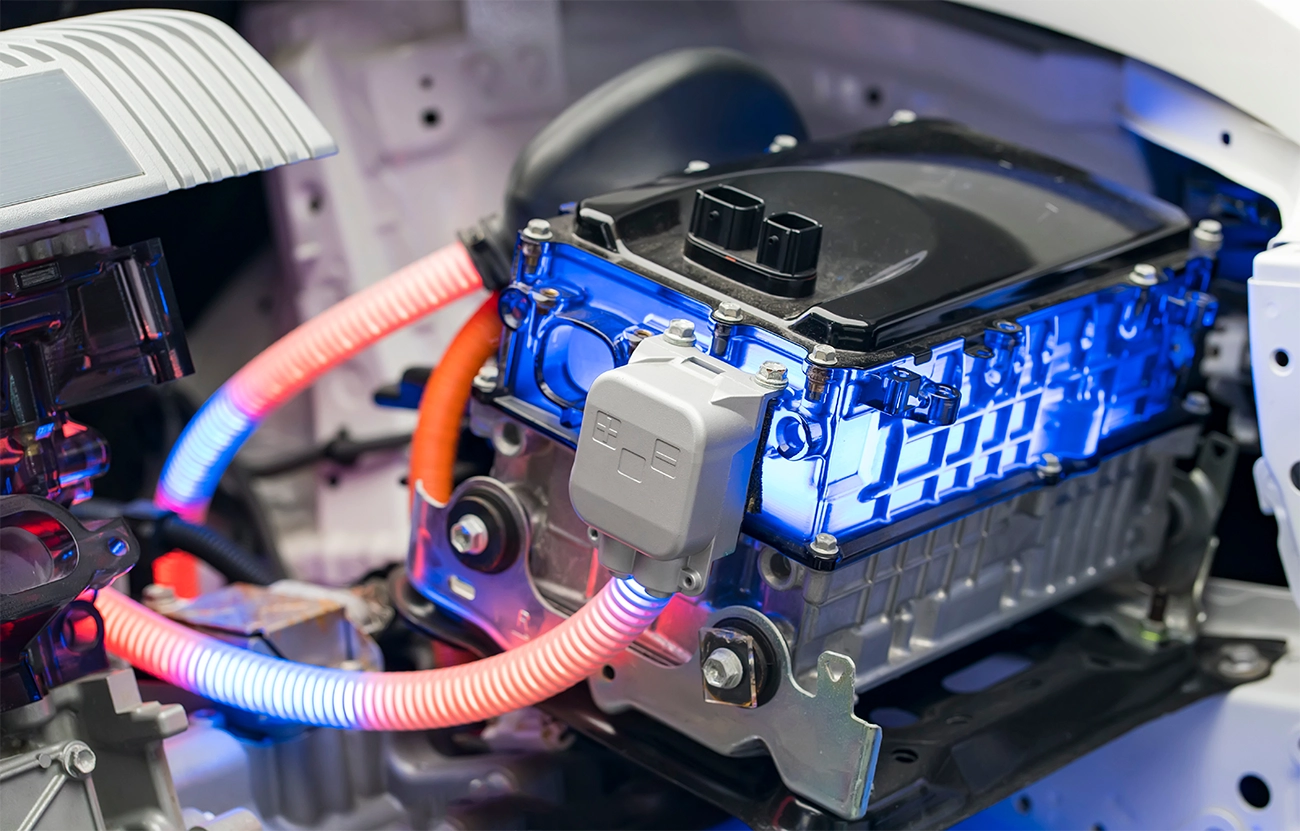
Currently, lithium-based batteries are the dominant technologies used in electric vehicles. Lithium-ion batteries offer high energy density and a long lifespan, making them ideal for EV applications. However, they also have limitations, such as high production costs and potential safety risks like thermal runaway. It’s worth noting that lithium-based batteries come in various chemistries, such as NMC (nickel-manganese-cobalt), NCA (nickel-cobalt-aluminium), LCO (lithium-cobalt oxide), and Li-S (lithium-sulphur), each with its own trade-offs in terms of energy density, cost and safety.
Lithium sulphur (Li-S) batteries are a promising alternative, offering a theoretical capacity significantly higher than that of lithium-ion batteries. However, they face challenges related to rapid capacity decrease and efficiency loss due to chemical reactions within the battery. Namely, the ‘shuttle effect’ occurs when polysulphides migrate between the electrodes, leading to active material loss and reduced cycle life. Despite these challenges, Li-S batteries are being researched for their potential to improve energy density, particularly for applications requiring lightweight energy storage, such as aviation and drones.
In addition to lithium-based batteries, lead-acid batteries are still used in certain applications such as forklifts in factories, due to their low cost and simplicity. However, they have low energy density and high weight, limiting their use in most modern electric vehicles. They are also commonly used in backup power systems and as starter batteries for internal combustion engine vehicles. The choice of battery technology depends on the specific requirements of the application.
Market
The market for battery materials is driven by the global trend towards decarbonization decarbonisation and the increasing demand for electric vehicles. Governments worldwide are implementing policies to encourage the adoption of EVs, such as incentives for purchasing electric vehicles and investments in battery manufacturing infrastructure. This trend is expected to continue, with electric vehicles projected to account for a significant portion of new vehicle sales in the coming decades.
The demand for advanced battery materials is also influenced by technological advances, such as solid-state batteries and lithium-sulphur batteries, which promise improved performance and safety. Companies are investing heavily in research and development to improve battery efficiency, reduce costs, and enhance sustainability. As a result, the market for battery materials is highly competitive and dynamic.
The growth of the electric vehicle market is closely tied to advances in battery technology. As batteries become more efficient, cheaper and safer, they will play a crucial role in the widespread adoption of electric vehicles. This in turn will drive further innovation in battery materials and technologies, creating a cycle of continuous improvement.
Challenges of current technology
One of the major challenges facing current lithium battery technology is degradation over time. This degradation occurs due to the growth of dendrites between the cathode and anode, leading to short circuits and cell failure. Electrolyte decomposition and structural changes in cathode materials, such as cracking or phase transitions, also contribute to capacity loss. As more cells fail, the overall battery performance decreases, requiring eventual replacement. Additionally, lithium batteries pose a risk of self-ignition, which is a significant safety concern.
Another challenge is the environmental impact of lithium mining and battery disposal. The extraction of lithium and other battery materials can have negative environmental effects, including water pollution and habitat destruction in mining regions, while the recycling of spent batteries remains a complex issue. Furthermore, the high cost of lithium and other critical materials contributes to the overall expense of electric vehicles, making them less competitive with traditional fossil fuel vehicles.
The reliance on lithium also exposes manufacturers to supply chain risks, as lithium is a finite resource with fluctuating market prices. This volatility can impact production costs and profitability, highlighting the need for diversification in battery materials and technologies. Researchers are exploring alternative chemistries and materials to mitigate these challenges, including sodium-ion batteries, which use abundant and low-cost materials but currently lag behind lithium-ion in energy density.
Positive impact of palladium
Palladium could play a significant role in improving lithium battery technology due to its resistance to corrosive environments, such as those found in lithium electrolytes. Palladium is also relatively inert, reacting weakly with other substances, which makes it suitable for use in battery components. By coating electrodes with palladium, it is possible to reduce the formation of dendrites between electrodes, thereby slowing down battery degradation and extending lifespan.
The use of palladium in battery electrodes could enhance safety by reducing the risk of short circuits and thermal runaway. This is particularly important for applications where reliability and safety are paramount, such as in electric vehicles. Additionally, palladium’s properties might allow for the development of more efficient battery management systems, further improving overall battery performance.
Palladium’s inertness and resistance to corrosion could also facilitate the development of new battery chemistries that are more sustainable and environmentally friendly. By reducing the need for expensive and rare materials, palladium could help make electric vehicles more accessible and affordable, contributing to a broader transition to renewable energy sources. Furthermore, palladium’s catalytic properties might be leveraged to enhance charging efficiency and reduce energy losses during battery operation.
To find out more about the catalytic qualities of palladium, see – Chemistry.
To find out more about palladium in modern battery technologies, see the following scientific publications:
- Wulandari, T., Fawcett, D., Majumder, S. B., & Poinern, G. E. (2023). Lithium‐based batteries, history, current status, challenges, and future perspectives. Battery Energy, 2(6), 20230030. DOI: https://doi.org/10.1002/bte2.20230030
- Etse, K. S., Boschini, F., Karegeya, C., Roex, E., Zaragoza, G., Demonceau, A., … & Mahmoud, A. (2020). Exploring organo-palladium (II) complexes as novel organometallic materials for Li-ion batteries. Electrochimica Acta, 337, 135659. DOI: https://doi.org/10.1016/j.electacta.2020.135659
- Armand, M., Axmann, P., Bresser, D., Copley, M., Edström, K., Ekberg, C., … & Zhang, H. (2020). Lithium-ion batteries – Current state of the art and anticipated developments. Journal of Power Sources, 479, 228708. DOI: https://doi.org/10.1016/j.jpowsour.2020.228708