


MLCC
Current technology
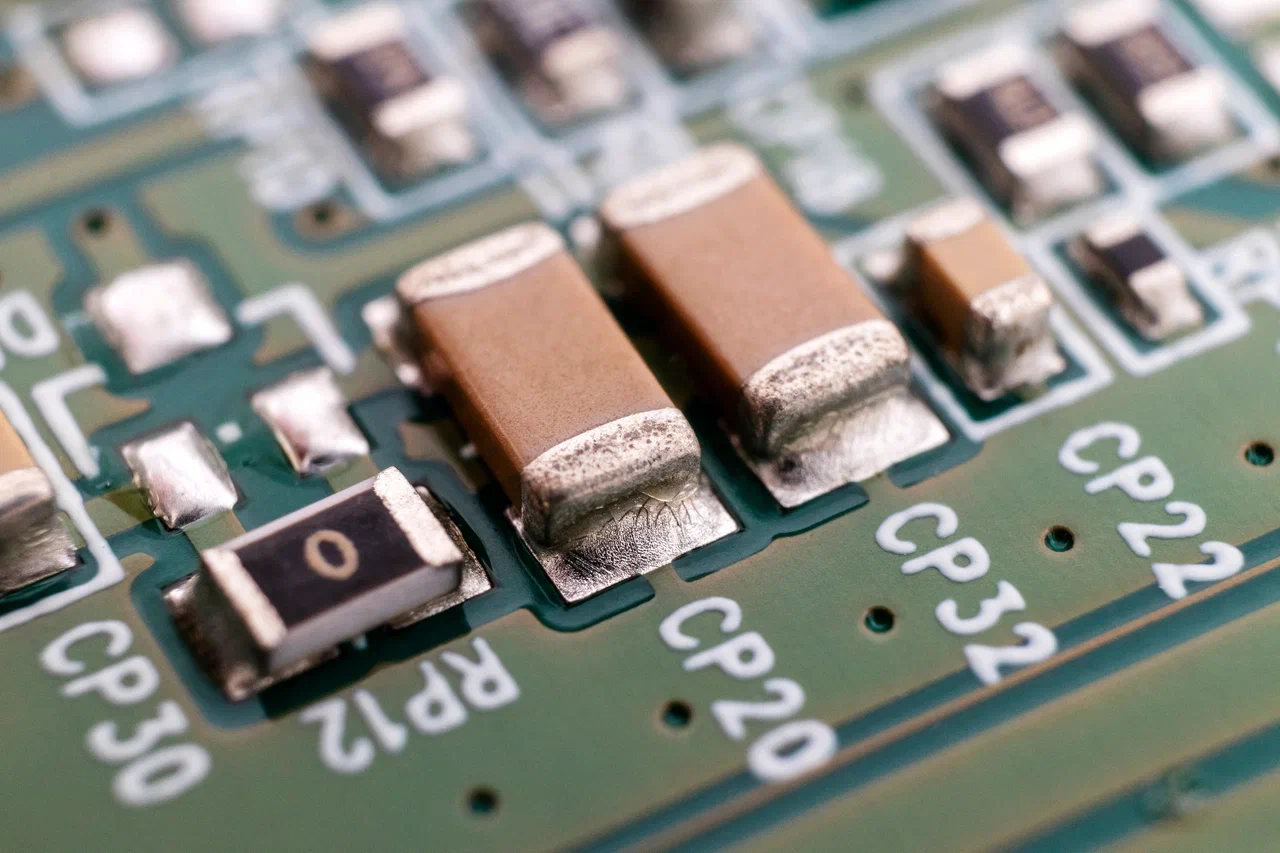
Multilayer ceramic capacitors (MLCCs) are a type of capacitor that consists of several conductive metal electrodes, sandwiched between multiple layers of ceramic material acting as a dielectric. The layered design offers high capacitance despite the compact size, making MLCCs ideal solutions for tight-space applications.
MLCCs are crucial components in modern electronics, including smartphones, laptops, electric vehicles, and various power electronic devices. They play a vital role in controlling current flow, reducing noise and preventing malfunctions in circuits. MLCCs are known for their compact size, high volumetric efficiency, capacitance and ability to handle high frequencies and temperatures, making them essential for high-performance and multi-functional electronic devices.
MLCCs are made from ceramic materials like barium titanate (BaTiO3) for high capacitance types or titanium dioxide (TiO2) for temperature stability applications, as well as calcium zirconate (CaZrO3), which provide the required dielectric constant.
The metal electrodes in MLCCs are usually made of two primary types: precious metal electrodes (PMEs) like silver or palladium and base metal electrodes (BMEs) such as nickel or cuprum copper (for limited applications).
The common manufacturing process involves creating thin ceramic sheets, screen printing metal electrodes onto them, stacking these layers, and then pressing and sintering the stack at high temperatures to achieve the desired crystalline structure.
Market
Base metal MLCCs dominate the market for high-capacity capacitors. Palladium MLCCs are used in highly reliable applications due to their performance in high-temperature, high-voltage and high-frequency environments.
Looking to the future, it is expected that the palladium market will enter surplus in the near future, and this may stabilise prices and positively affect the dynamics of palladium MLCCs compared to alternative base metals.
Challenges of current technology
MLCCs face challenges like capacitance reduction under DC bias and temperature sensitivity, requiring careful selection for specific applications. Research is focused on different tracks including improving dielectric properties through nano/microstructure control, chemical modification to enhance performance and reliability, stacking larger numbers of dielectric layers, increasing the overlapped area of internal electrodes and improving manufacturing technologies.
The high sintering temperatures (over 1000 °C) of dielectric materials cause metal diffusion into the dielectric layer, residual stress and mechanical cracking due to sintering shrinkage, which results in poor performance, reduced reliability and malfunctioning of MLCCs.
Sector-specific challenges
The energy distribution system in electric vehicles (EVs) requires significantly more MLCCs than traditional vehicles (up to 10,000 per EV compared to 2,000 for internal combustion engine cars) with high capacitance to handle the significant power loads. Meeting these demands while ensuring reliability is a major hurdle.
The rollout of 5G networks has driven demand for high-capacity MLCCs that can handle increased data transmission rates. This requires advancements in both material properties and manufacturing techniques to meet stringent performance requirements.
Positive impact of palladium
In order to make the dielectric layers insulating and the metal electrode layers conducting, highly oxidation-resistant precious metals such as palladium can be used for co-firing in a regular air atmosphere. In addition, it has good thermal compatibility with the ceramic dielectric, reducing stress during the firing process.
PME MLCCs using palladium electrodes offer proven long-term reliability, making them suitable for high-reliability applications such as the automotive industry, the military, aerospace and medical devices, as they meet strict technical specifications. PME MLCCs with palladium are preferred for high-voltage, high-frequency applications, especially those requiring capacitance in the picofarad range, due to their stability and reliability in these conditions.
While palladium’s use in MLCCs has decreased due to cost concerns, it remains crucial in specialty segments where reliability and performance under extreme conditions are paramount.
To find out more about the physical properties of palladium see – Chemistry.
To find out more about palladium in multilayer ceramic capacitors and electronics, see the following scientific publications:
- Hong, K., Lee, T. H., Suh, J. M., Yoon, S. H., & Jang, H. W. (2019). Perspectives and challenges in multilayer ceramic capacitors for next generation electronics. Journal of Materials Chemistry C, 7(32), 9782-9802. DOI: https://doi.org/10.1039/c9fo02921d
- Yousefian, P., & Randall, C. A. (2023). Quality assessment and lifetime prediction of base metal electrode multilayer ceramic capacitors: Challenges and opportunities. Power Electronic Devices and Components, 6, 100045. DOI: http://dx.doi.org/10.1016/j.pedc.2023.100045
- Chen, S., Ding, Y., Mu, H., Tian, W., Deng, X., Gao, R., … & Fu, C. (2025). Research progress on multilayer ceramic capacitors for energy storage. Journal of Materials Science: Materials in Electronics, 36(1), 77. DOI: http://dx.doi.org/10.1007/s10854-024-14004-2