


Mirror coatings
The reflective properties of palladium, particularly in the visible and infrared ranges, as well as its resistance to corrosion and high temperatures, make it an ideal material for specialised mirrors (such as those used in lasers, spectrometers and endoscopes).
Palladium-coated mirrors provide effective reflection and minimal energy loss for the laser beam. Additionally, palladium’s good thermal stability allows these mirrors to maintain their optical properties even at high temperatures, which is crucial for lasers that generate significant heat.
Palladium mirrors can be used in scientific research, including in physics and chemistry, to study various processes and phenomena related to light reflection and absorption. The ability to apply palladium in thin films or nanostructures enables the creation of highly sensitive optical devices. In combination with other materials, palladium can also be employed in surface plasmon resonance spectroscopy, which enhances the sensitivity and resolution of spectrometers.
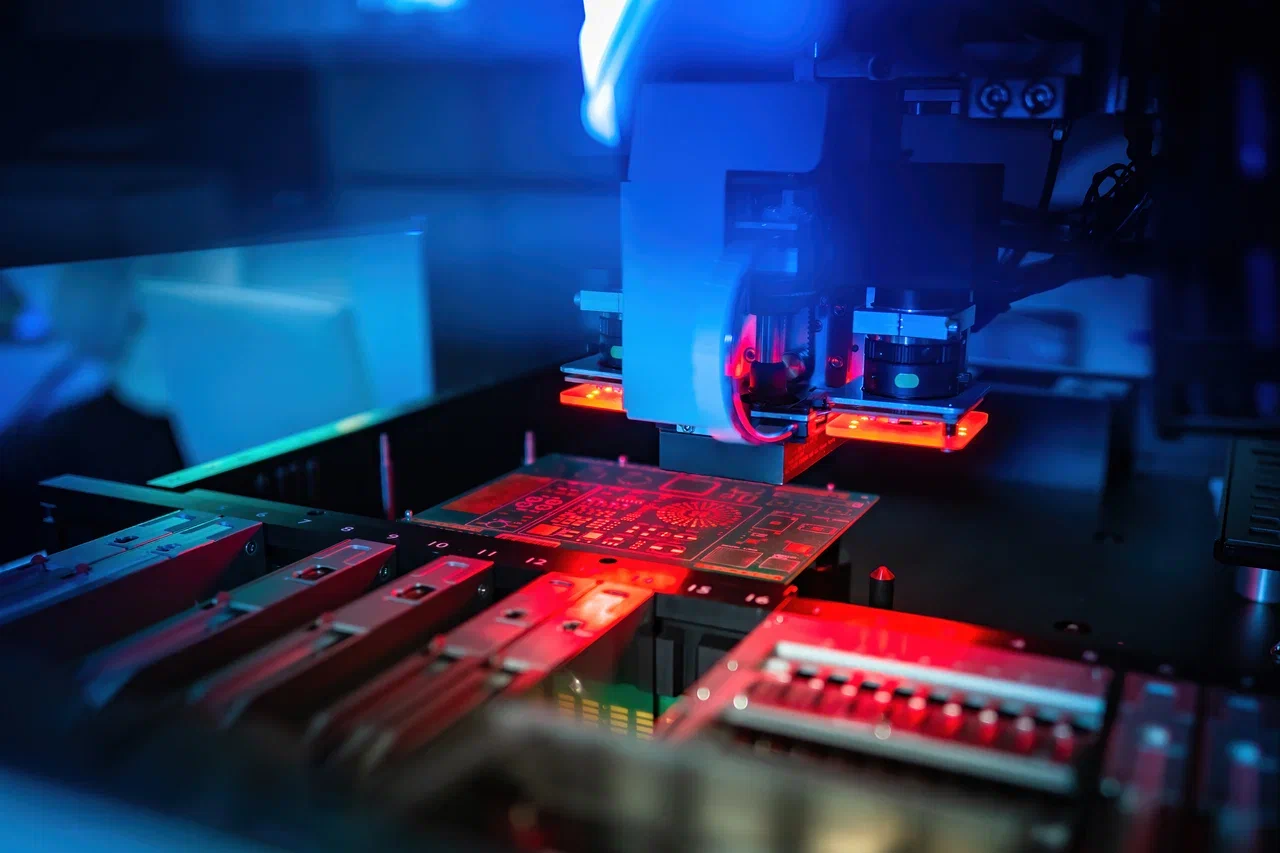
Moreover, palladium is widely used in medical mirrors, particularly in the manufacturing of endoscopes, where its biocompatibility is essential. Palladium’s resistance to corrosion and oxidation ensures the longevity and reliability of these mirrors in aggressive environments where other materials might degrade.
To find out more about the physical qualities of palladium, see – Chemistry.
To find out more about palladium in optics, see the following scientific publications:
Shiraishi, T., & Tilley, R. J. (2014). An estimation of the reflectivity of some monophasic binary gold alloys. Gold Bulletin, 47, 75-82. DOI: https://doi.org/10.1007/s13404-013-0124-7
Sullivan, B. T. (1990). Optical properties of palladium in the visible and near UV spectral regions. Applied optics, 29(13), 1964-1970. DOI: https://opg.optica.org/ao/abstract.cfm?URI=ao-29-13-1964
Weaver, J. H. (1975). Optical properties of Rh, Pd, Ir, and Pt. Physical Review B, 11(4), 1416. DOI: https://doi.org/10.1103/PhysRevB.11.1416
Ni, H., Huang, Q., Liu, G., Qi, R., Zhang, Z., Li, X., … & Wang, Z. (2020). Comparative study of Pd/B4C X-ray multilayer mirrors fabricated by magnetron sputtering with Kr and Ar gas. Materials, 13(20), 4504. DOI: http://dx.doi.org/10.3390/ma13204504
Kageyama, Y., & Aoki, A. (2024, November). Effect of Pt Catalyst Instead of Pd on Switchable Ag Mirror Devices. In Electrochemical Society Meeting Abstracts PRiME 2024 (No. 38, pp. 2580-2580). The Electrochemical Society, Inc.. DOI: http://dx.doi.org/10.1149/MA2024-02382580mtgabs