


Hydrogen fuel cells
Current technology
Hydrogen fuel cells are at the heart of hydrogen mobility. Their most efficient application is in proton exchange membrane fuel cells (PEMFCs). These hydrogen-air fuel cells convert hydrogen energy into electricity, and palladium-containing catalysts can enhance the efficiency of this process.
Hydrogen fuel cells are designed to address the challenges faced by modern electric vehicles powered by lithium-ion batteries, the main ones being heaviness, low autonomy (driving range on a single charge), and lengthy charging times.
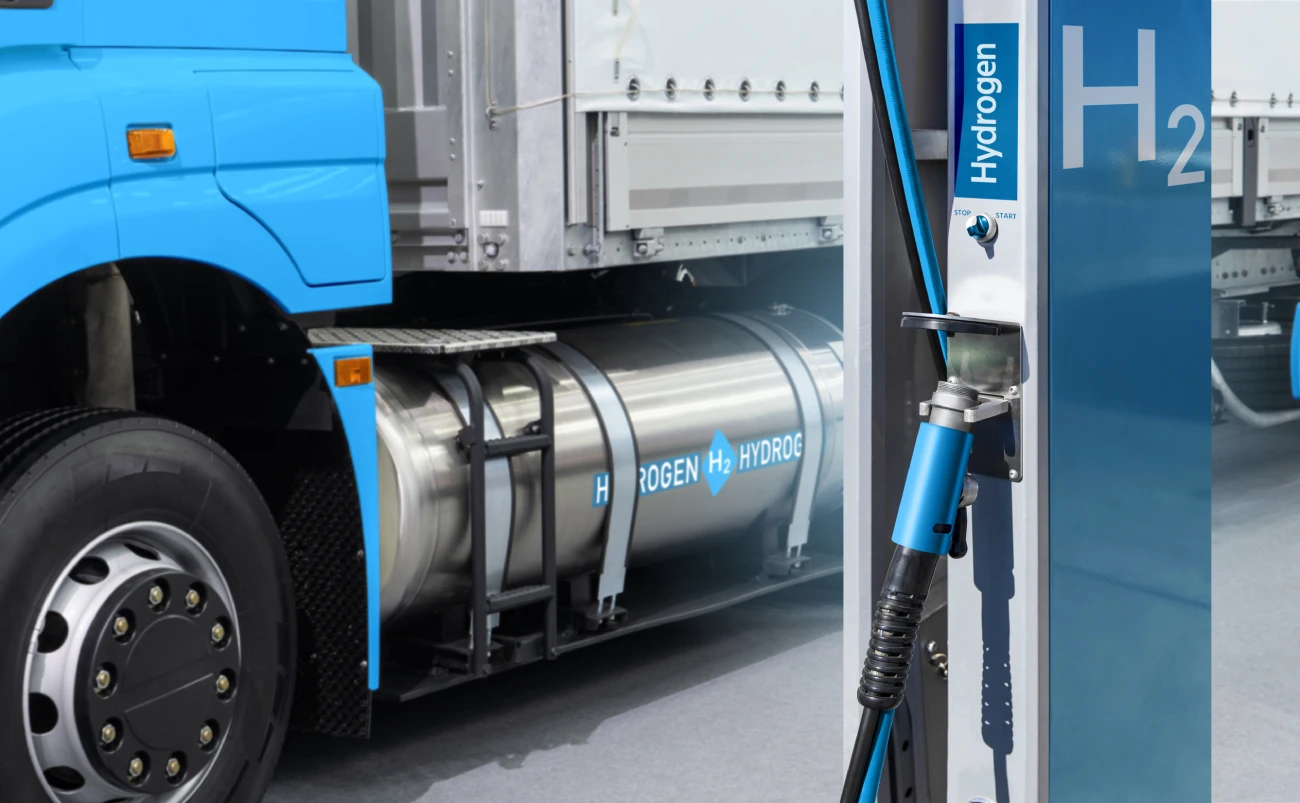
Hydrogen fuel cell vehicles have been gaining popularity in recent years as a promising alternative to hybrids, internal combustion engine cars, and battery-powered cars. Hydrogen fuel cells have advantages for heavy tracks and long-distance commercial transport including trains, aircrafts and vessels. They are also widely used for UAVs.
Market
By 2030, their annual output will be from 290,000 units to 1.7–2 million units relative to the current production level of 30,000–80,000, according to analysts at Metals Focus, IEA and McKinsey.
Challenges of current technology
Factors such as the lack of a developed hydrogen refuelling infrastructure and issues with long-term hydrogen storage hinder the widespread adoption of hydrogen electric vehicles.
In hydrogen-powered electric vehicles, the electric motor can be powered not only by fuel cells but also by batteries. The reason for this is that fuel cells are not well-suited to sudden load changes. Nevertheless, this combined design is significantly lighter than battery-powered systems, quickly refuels with hydrogen, has a much greater range, and is more cost-effective, which makes it attractive to major car manufacturers.
As we transition to alternative energy production systems, largely driven by the need to address urgent climate issues, hydrogen energy is becoming increasingly relevant, and palladium could play a key role in its development and expansion.
Positive impact of palladium
As an electrocatalyst, palladium can be used in fuel cells in alloy with platinum.
In PEMFCs, a palladium-platinum alloy is used to accelerate reactions both at the cathode and the anode. At the anode, hydrogen molecules (H₂) are oxidised, forming protons (H⁺), and electrons (e⁻) are directed into the external electrical circuit, generating an electric current. At the cathode, protons and electrons react with oxygen (O₂), forming water (H₂O). This reaction is exothermic.
The growing use of PEMFCs makes the use of palladium-platinum alloy catalysts justifiable, as these catalysts match platinum ones in both activity and stability. Research continues to improve palladium-based catalysts and adapt them to specific operating conditions. Early semi-industrial tests of catalysts based on platinum-palladium alloy nanoparticles are already showing excellent performance.
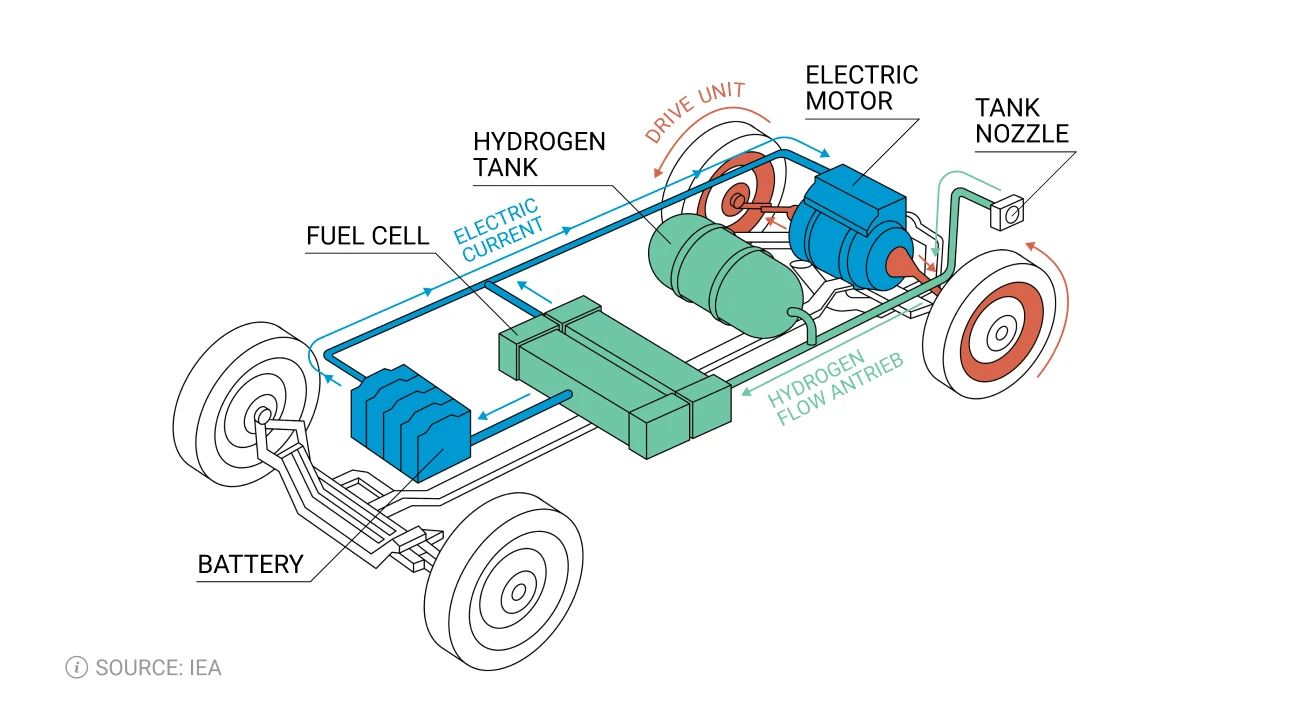
Key components of a hydrogen fuel cell vehicle
To find out more about the catalytic qualities of palladium see – Chemistry.
To find out more about palladium in proton exchange membrane fuel cells, see the following scientific publications:
- Wu, H., Xiao, F., Wang, J., Gu, M., & Shao, M. (2024). Highly active and durable core–shell electrocatalysts for proton exchange membrane fuel cells. Nano Research, 17(10), 8772-8784. DOI: https://doi.org/10.1007/s12274-023-6297-3.
- Promanan, T., Chaisena, A., Sarakonsri, T., Thungprasert, S., & Narakaew, S. (2024). Binary and ternary alloys based on Pd as cathode catalysts on nitrogen-doped reduced graphene oxide via polyol methods for proton exchange membrane fuel cell. Inorganic Chemistry Communications, 168, 112945. DOI: https://doi.org/10.1016/j.inoche.2024.112945.
- Alaswad, A., Omran, A., Sodre, J. R., Wilberforce, T., Pignatelli, G., Dassisti, M., … & Olabi, A. G. (2020). Technical and commercial challenges of proton-exchange membrane (PEM) fuel cells. Energies, 14(1), 144. DOI: https://doi.org/10.3390/en14010144