


Reserves & mining
Reserves of platinum group metals
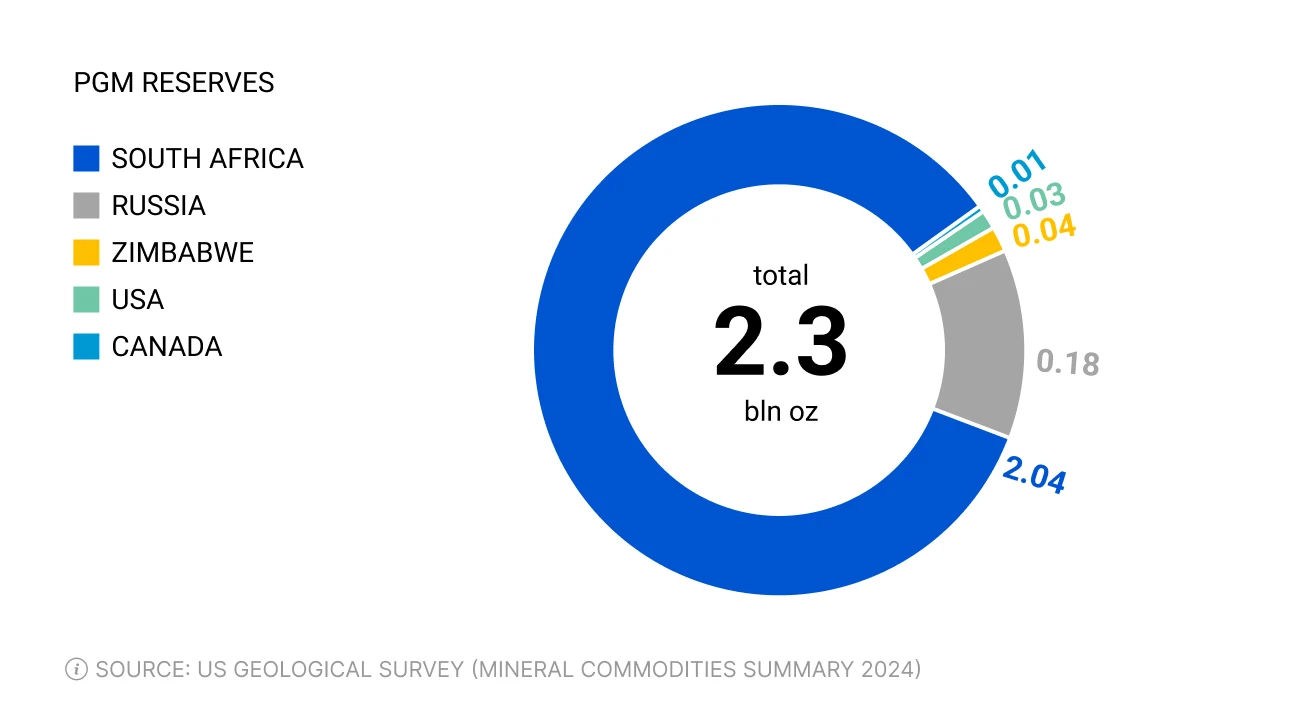
Platinum group metals (PGMs) are among the rare elements and they occur in the same deposits. The extraction of these metals takes place in only a few countries worldwide, with total estimated reserves of approximately 2.3 billion troy ounces. Among PGMs, palladium is the most abundant, followed by platinum, both of which are highly valued for their industrial applications.
South Africa dominates the global PGM market, holding over 80% of the world’s known reserves. The majority of these metals are found in the Bushveld Complex, the largest PGM deposit on the planet. This vast geological formation comprises several major ore-rich zones, including the Merensky Reef, Rustenburg and the Eastern Limb. Alongside platinum group metals, the complex also contains significant deposits of nickel, copper and other valuable elements, further enhancing its economic importance.
Beyond South Africa, Russia holds the world’s second-largest proven PGM reserves, accounting for approximately 8% of global resources. The country’s key deposits are primarily located in the Norilsk industrial region and on the Kola Peninsula, where large-scale mining operations extract these valuable metals. Russia is particularly notable for its unique PGM reserves, which are distinguished by a high concentration of palladium.
Production volumes and distribution by country
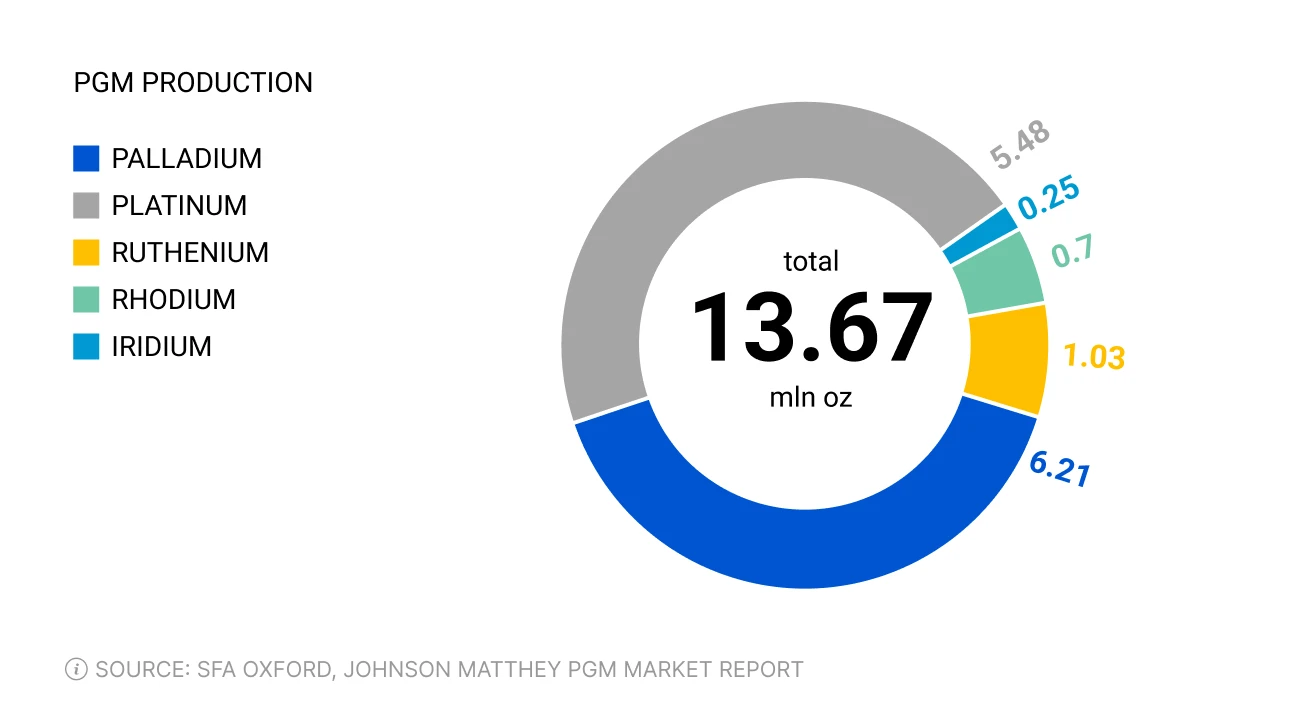
Global PGM primary production totals approximately 13.675 million ounces per year, with palladium accounting for the largest share. Its annual output reaches 6.210 million ounces, while the next is platinum, which stands at 5.475 million ounces per year. Palladium and platinum together account for 85% of global PGM production, and are therefore viewed as the most significant metals for mass industrial applications.
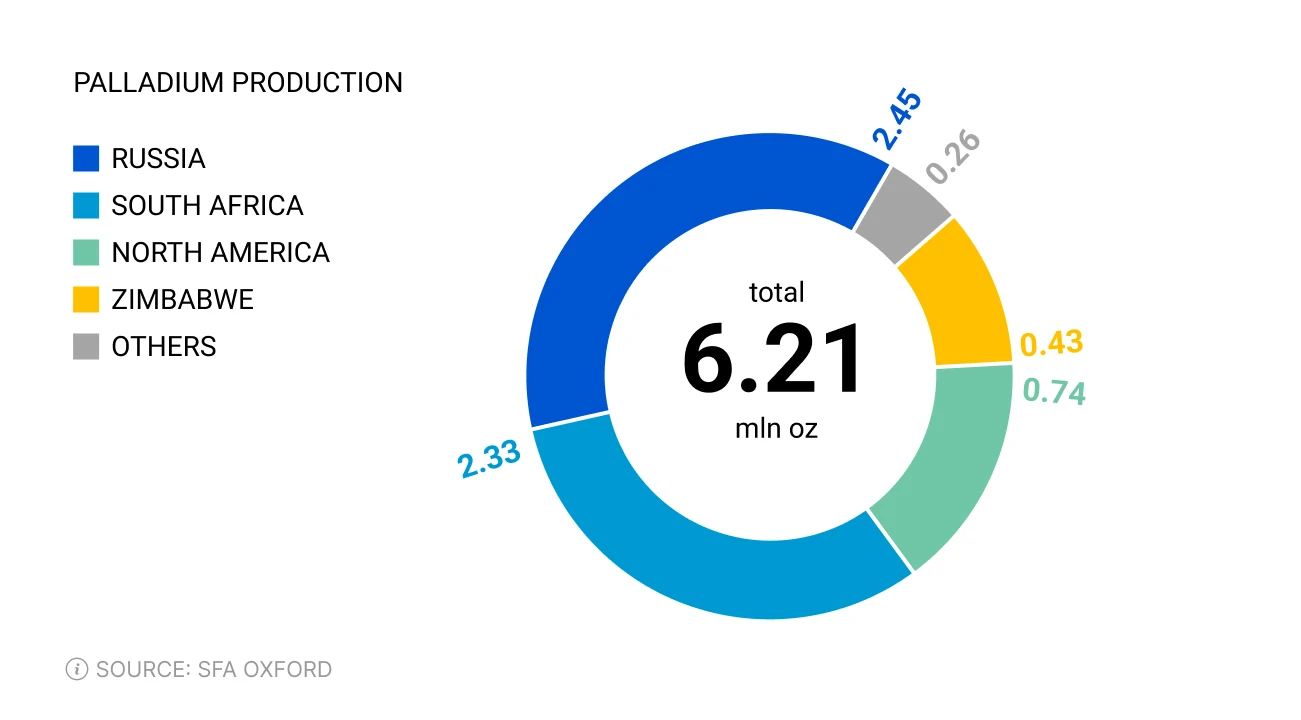
Palladium production is largely concentrated in both South Africa and Russia which together contribute over 75% of global supply, producing around 4.775 million ounces annually. Unlike other PGMs, whose production is heavily dependent on South Africa, palladium benefits from a more balanced geographical distribution. This diversification enhances supply stability and reduced susceptibility to local disruptions.
As a result, palladium not only leads PGMs in production volume but also offers a more resilient supply chain, making it an attractive choice for many industrial consumers.